
Trees are one of the best things about living in Charlotte. They shade your roof, cool your yard, and add real value to your property. But a tree that is never pruned does not stay safe on its own. Deadwood builds up, weak limbs spread, and branches creep closer to your home and power lines with every growing season. Tree trimming is how you keep a healthy tree healthy - and how you catch a dangerous one before a storm does the pruning for you.
Why Tree Trimming Matters in Charlotte
The Charlotte area grows a wide mix of species - tall hardwoods like oaks and maples, fast-growing pines, and flowering trees like dogwoods and crape myrtles. That variety is beautiful, but it also means a long list of things that can go wrong. Summer thunderstorms, ice storms, and high winds are a regular part of life here, and the limbs that fail are almost always the ones nobody looked at. Regular trimming removes the deadwood, corrects weak structure, and clears clearance over your roof, driveway, and power lines before a storm finds the weak spot for you.
The Best Times of Year to Trim Trees in Charlotte
There is no single trim date that works for every tree, but there is a right window for almost all of them. Here is how to think about timing.
Late Winter Is the Sweet Spot for Most Trees
For most shade and hardwood trees, late winter is the best time to prune. The tree is dormant, so the stress of cutting is minimal, and the wounds seal quickly once growth resumes in spring. Fewer pests and diseases are active, there is no foliage in the way, and it is far easier for a crew to see the tree's true structure and make the right cuts. Late winter pruning also sets the tree up to put its spring energy into strong, well-placed new growth instead of responding to damage.
Timing by Species
Oaks and maples do best in the late-winter dormant window. Flowering trees such as dogwoods and crape myrtles should be trimmed right after they bloom, which protects the flowers you look forward to each year. Pines generally do not need heavy structural pruning - for them, trimming usually means removing dead or storm-damaged limbs. And any dead, cracked, or storm-damaged limb is a different case entirely: it should come down as soon as possible, no matter the season.
What to Avoid
Try not to prune heavily in early spring just as buds are breaking, when the tree is spending energy on new growth. In the Charlotte area, avoid pruning oaks during the warmer months when oak wilt and other diseases spread more easily. And never top a tree. Topping creates weak, sprouting regrowth that is more likely to break in the next storm - it is a shortcut that costs you more later.
Reading the Warning Signs Before a Storm
If you are not sure whether a tree needs attention, look for these red flags. Deadwood is the most common one - bare, brittle branches that snap without warning. Weak crotches matter too: a narrow V-shaped joint is far more likely to split than a strong U-shaped one. Pay attention to anything hanging over your home, your driveway, or a power line, since those are the limbs that cause real damage when they fall. Cracks in the trunk, cavities, mushrooms growing at the base, or a sudden new lean all point to a tree that should be evaluated sooner rather than later. When in doubt, a quick professional look is the safest call.
Why Professional Pruning Beats DIY Cuts
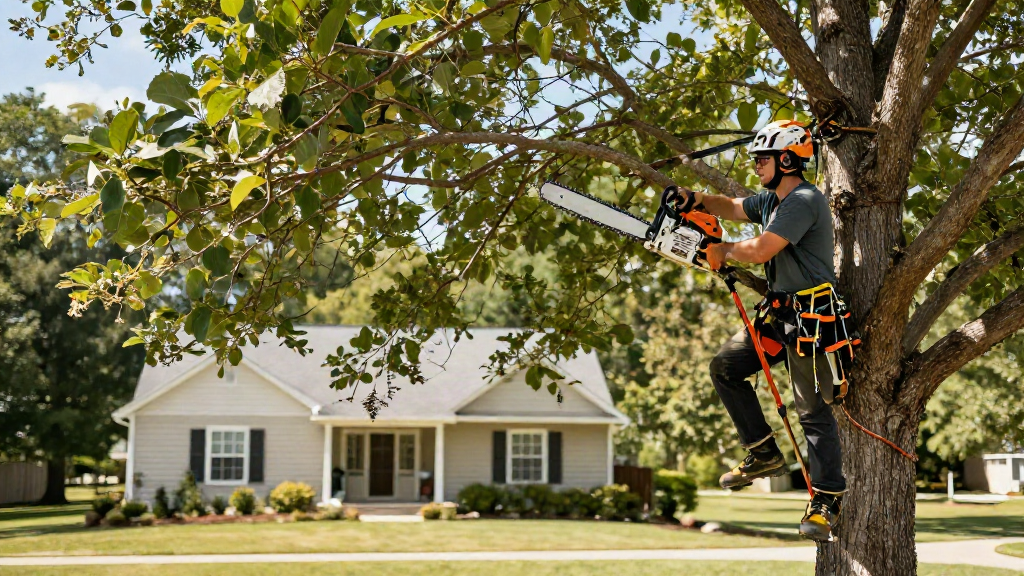
It is tempting to grab a ladder and a chainsaw and handle the low limbs yourself. But tree work is one of the most dangerous jobs there is, and most serious injuries happen to homeowners, not pros. Getting it right means knowing where the branch collar is, using the correct three-cut method so bark does not tear, and rigging limbs safely when they hang over a roof or structure. A licensed and insured crew also carries the liability coverage that protects you if something does go wrong on your property. That is the difference between a job that looks fine for a season and one that actually protects your home.
What a Free Estimate Looks Like
You should never have to guess at the price of tree work. KSOR Tree Service provides free, no-pressure estimates. A crew member walks your property with you, points out the hazards and the trees that are genuinely fine as they are, and explains exactly what the work involves. You get a clear scope and a clear price before anyone starts a saw - no surprises, no upsell you did not ask for.
Trusted Tree Trimming in Charlotte and Nearby
KSOR Tree Service was founded in 2007 and has spent more than 18 years caring for trees across Charlotte and the surrounding communities, including Matthews, Mint Hill, Pineville, Huntersville, Indian Trail, and Fort Mill. We handle residential and commercial work - precise trimming, technical removals near homes and power lines, stump grinding, and land clearing - all backed by a licensed and insured team. When storms hit, our emergency response is available around the clock.
The Bottom Line
Not every tree has to come down - but when a limb is hanging over your home, you want a crew that can handle it safely and correctly. Proper trimming at the right time of year keeps your trees healthy, your yard beautiful, and your family protected when the next Charlotte storm rolls through. If you are not sure when or how to trim, get a straight answer from a local, licensed, and insured crew.
Call KSOR Tree Service for a free estimate on tree trimming in Charlotte and keep your trees - and your home - safe.